

Things to See in Ohrid
Ohrid is one of the oldest and most historically significant cities in the Balkans and is often referred to as the cultural heart of North Macedonia. Known for its rich religious heritage, medieval architecture, and beautiful lakeside setting, Ohrid offers a unique combination of history, culture, and nature.
Although the city no longer has the legendary 365 churches it was once said to possess, Ohrid still remains home to many remarkable churches, monasteries, archaeological sites, and historic landmarks that can be explored throughout Ohrid Old Town and the surrounding region.
Some of the most important places to visit include:
- Church of Saint John at Kaneo
- Saint Sophia Cathedral
- Samuel's Fortress
- Plaosnik
- Ancient Theatre of Ohrid
- Church of Holy Mary Peribleptos
Beyond Ohrid Old Town, visitors are also encouraged to explore:
- Monastery of Saint Naum
- National Park Galicica
- Bay of Bones Museum
- the nearby lakeside town of Struga
Many attractions around Ohrid can easily be visited on foot while staying at Villa Varosh, especially within the historic Old Town area where churches, beaches, viewpoints, restaurants, and cultural sites are located only a few minutes apart.
Church of Saint John at Kaneo
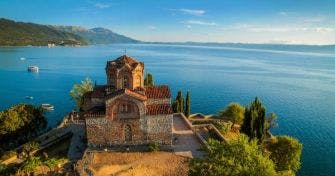
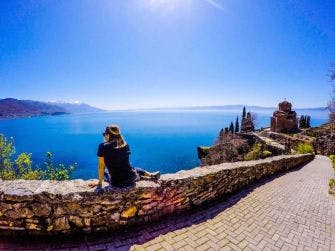
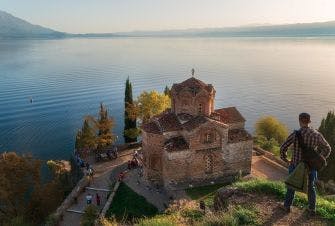
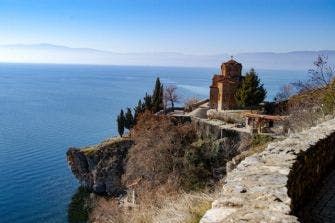
The Church of Saint John at Kaneo is one of the most famous and photographed landmarks in Ohrid and one of the most iconic churches in North Macedonia. Perched dramatically on a cliff above Lake Ohrid, the church overlooks the peaceful waters of the lake and offers some of the most beautiful panoramic views in the region.
Located in the Kaneo area of Ohrid Old Town, the church is dedicated to Saint John the Theologian and is believed to have been built during the 13th century. Its architecture is especially notable for combining Byzantine and Armenian influences, making it one of the most distinctive religious monuments in the Balkans.
The church was constructed on a stone foundation and features decorative ceramic details and carefully crafted stone carvings on its exterior. Although the original fresco painters remain unknown, several preserved fresco fragments are considered masterpieces of medieval art. Among the most notable are depictions of the Communion of the Apostles, as well as portraits of Saint Clement, Saint Erasmus, and Constantine Kavasilas.
Beyond its historical and architectural importance, Saint John at Kaneo is admired for its unique location and atmosphere. Surrounded by lake views, cliffs, and peaceful walking paths, it remains one of the most visited attractions in Ohrid and a favorite spot for photography, sunsets, and quiet reflection.
The church is easily reachable on foot from Villa Varosh through the scenic streets of Ohrid Old Town and along the lakeside promenade.
- Phone: +389 46 23 04 55
- Location: Kaneo Plaoshnik Pateka

Church of Saints Clement and Panteleimon
Plaosnik is home to the Church of Saints Clement and Panteleimon, one of the most important spiritual and historical sites in Ohrid and the wider Slavic world.
The church is closely connected to Saint Clement of Ohrid, one of the most significant disciples of Saints Cyril and Methodius and an important figure in the development of Slavic literacy, education, and Christianity. The site is traditionally associated with the Ohrid Literary School, one of the first centers of Slavic education in Europe.
The original medieval church is believed to date back to the 9th century and was later rebuilt and restored over the centuries. During the Ottoman period, the church was briefly converted into a mosque before eventually returning to its original religious purpose.
Today, visitors can explore the reconstructed church together with the surrounding archaeological complex, which includes remains of early Christian basilicas, ancient mosaics, and preserved foundations visible beneath glass floor sections inside the church.
Beyond its historical and architectural significance, the Church of Saints Clement and Panteleimon is considered one of the holiest and most culturally important places in North Macedonia and remains a symbol of Ohrid’s religious and educational heritage.
Location: Kuzman Kapidan
Saint Sophia Cathedral
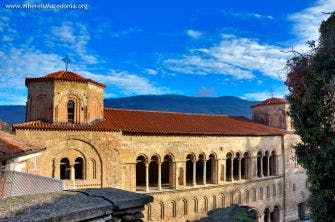
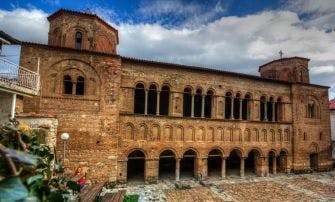
Saint Sophia Cathedral is one of the most important medieval churches in Ohrid and among the most significant religious and historical monuments in North Macedonia. Located in the heart of Ohrid Old Town, the cathedral represents one of the finest examples of Byzantine architecture and art in the region.
Built during the 11th century, Saint Sophia once served as the cathedral church of the Archbishopric of Ohrid, an important religious center throughout the Balkans for centuries.
The interior of the church is especially famous for its preserved Byzantine frescoes, many of which date back to the 11th, 12th, and 13th centuries. Although some frescoes faded over time, many still remain remarkably detailed and are considered masterpieces of medieval Orthodox art.
Architecturally, the cathedral features large stone columns, elegant arches, and impressive interior spaces that create a unique historical atmosphere. The church is also known for its exceptional acoustics, and today it is frequently used for classical music concerts and cultural events, especially during the Ohrid Summer Festival.
Next to the cathedral, visitors can enjoy a peaceful garden area that provides a quiet retreat within the lively streets of Ohrid Old Town.
Because of its central location, Saint Sophia Cathedral is only a short walk from Villa Varosh and is one of the essential landmarks to visit while exploring Ohrid.
- Phone: +389 46 26 74 03
- Location: Car Samoil
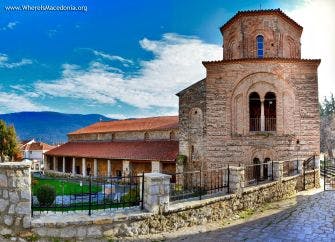
Church of Holy Mary Peribleptos
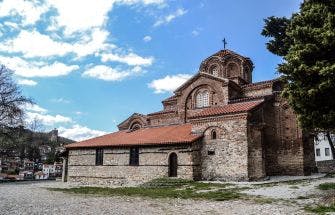
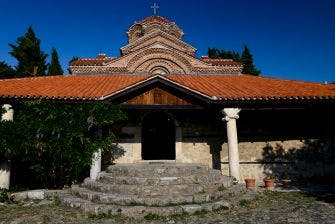
The Church of Holy Mary Peribleptos is a remarkable example of Byzantine architecture and art in North Macedonia. Located in the historic part of Ohrid Old Town near the Upper Gate, the church was built before 1295 and remains one of the city’s most significant cultural and religious monuments.
The church was commissioned by Progon Zgur, a relative of the Byzantine imperial family and son in law of Emperor Andronikos II Palaiologos.
Architecturally, the church was built in the form of an inscribed cross with a central dome supported by four pillars. Its eastern side ends with a beautifully designed altar apse, reflecting the characteristic style of Byzantine religious architecture from the period.
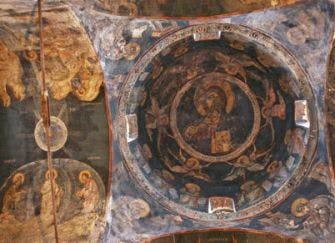
Holy Mary Peribleptos is especially famous for its extraordinary frescoes created by the renowned medieval painters Mihailo and Eutychios. Their work is considered among the finest achievements of Byzantine painting in the Balkans and had a major influence on later Orthodox religious art throughout the region.
The interior of the church features richly detailed fresco compositions, portraits of saints, biblical scenes, and artistic elements that have been preserved for centuries.
Today, the church is one of the most visited historical and cultural attractions in Ohrid and can easily be reached on foot while exploring Ohrid Old Town.
Location: Clement's University
Church of Saint Bogorodica Bolnichka
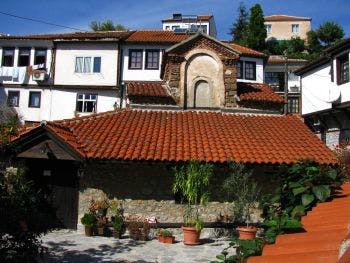
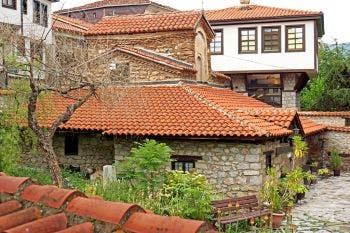
The Church of Saint Bogorodica Bolnichka is one of the lesser known but historically fascinating churches in Ohrid Old Town. The word “Bolnichka” comes from the Macedonian word for hospital, reflecting the church’s historical role during periods of epidemic disease in medieval Ohrid.
According to local tradition, this church, together with another nearby church, once served as a quarantine area where travelers and visitors arriving in Ohrid during times of plague and disease were required to remain isolated before entering the city.
Despite its modest exterior, the church preserves valuable examples of medieval Orthodox art. Inside, visitors can admire beautiful 14th century frescoes as well as a finely crafted 19th century wooden iconostasis.
Located within the historic streets of Ohrid Old Town, the church offers a quieter and less crowded experience compared to some of the city’s larger landmarks, while still providing insight into Ohrid’s rich religious and historical heritage.
- Location: Ohrid
- Open 09:00-13:00
Samuel’s Fortress
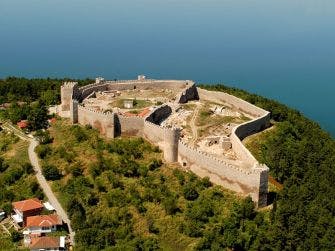
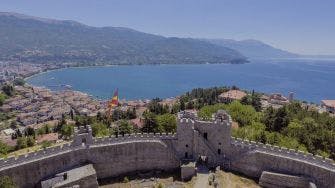
Samuel's Fortress is one of the most recognizable landmarks in Ohrid and one of the most important medieval fortifications in the Balkans. Rising above Ohrid Old Town, the fortress dominates the city skyline and offers spectacular panoramic views of Lake Ohrid and the surrounding area.
During Byzantine times, Ohrid was an important political, cultural, and religious center. In the early 11th century, the city briefly became the capital of the empire ruled by Tsar Samuel, after whom the fortress is named.
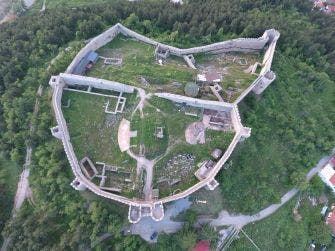
Built on a strategic hilltop position, Samuel’s Fortress once served as one of the strongest defensive structures in the region. The original fortification included walls stretching approximately 3 kilometers in length and reaching heights of up to 16 meters.
Today, parts of the ancient walls, 18 towers, and several gates remain preserved, allowing visitors to explore the historical complex and enjoy views over Ohrid Old Town, the lake, and nearby mountains.
Archaeological findings suggest that the site was used as a fortified settlement long before Tsar Samuel’s period, with origins dating back to antiquity.
Because of its elevated location and historical significance, Samuel’s Fortress is one of the most visited attractions in Ohrid and an essential stop while exploring the city’s historical heritage.
The fortress is located within walking distance from Villa Varosh and can easily be combined with visits to nearby attractions such as Ancient Theatre of Ohrid and Plaosnik.
- Phone: +389 46 26 23 86
- Location: Samoil's Fortress
Plaosnik
Plaosnik is one of the most important historical, archaeological, and spiritual sites in Ohrid. Located on a hill above Lake Ohrid, the area offers beautiful panoramic views together with some of the most significant early Christian and medieval monuments in the region.
The site is best known for the Church of Saints Clement and Panteleimon, which was reconstructed in 2002 on the foundations of an older medieval church dating back to the 9th century. The church is closely connected to Saint Clement of Ohrid, one of the most important figures in Slavic literacy and education.
One of the most unique features inside the church is the use of glass floor sections that allow visitors to see the original archaeological foundations and preserved remains beneath the structure.
Around the church, visitors can explore the remains of an even older early Christian complex, including the foundations of a large 5th century basilica decorated with impressive floor mosaics featuring floral, animal, and geometric motifs typical of early Christian art.
Many of the archaeological remains are protected beneath covered walkways, allowing visitors to closely observe the preserved mosaics and architectural elements while exploring the site.
Because of its combination of history, religion, archaeology, and lake views, Plaosnik is considered one of the most important attractions in Ohrid Old Town and is frequently visited together with nearby landmarks such as Church of Saint John at Kaneo and Ancient Theatre of Ohrid.
Plaosnik can easily be reached on foot from Villa Varosh while exploring the historic streets of Ohrid Old Town.
- Phone: +389 46 25 40 13
- Location: Kaneo Plaosnik Pateka

Ancient Theatre of Ohrid
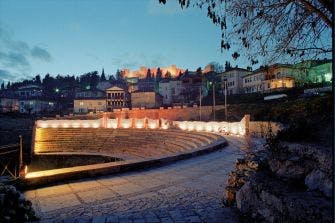
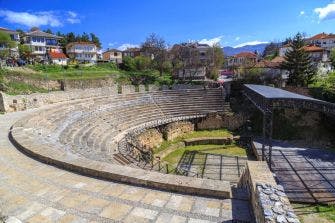
The Ancient Theatre of Ohrid is one of the most important historical landmarks in Ohrid and one of the few preserved Hellenistic theatres in the region. Located near the Upper Gate in the historic Varosh area of Ohrid Old Town, the theatre was built between the 3rd and 2nd century BC and originally had a capacity of around 4,000 spectators.
Its location between two surrounding hills provided excellent natural acoustics and protection from strong winds, making it an ideal venue for public performances and gatherings.
During Roman times, the theatre was also used for gladiator fights and public events. Because Christians were executed here during the Roman period, the site later became deeply unpopular among local residents. After the fall of the Roman Empire and the arrival of Christianity in Ohrid, the theatre was gradually abandoned and eventually buried under layers of earth and stone.
For centuries, the theatre remained hidden until it was accidentally rediscovered during archaeological excavations in the 1980s. Thanks to its long burial, much of the original structure remained remarkably well preserved.
Today, the Ancient Theatre has been carefully restored and once again serves as an active cultural venue. It regularly hosts concerts, performances, and public events, including the internationally known Ohrid Summer Festival held every year during the summer season.
Located within walking distance from Villa Varosh, the Ancient Theatre is one of the most visited attractions in Ohrid Old Town and an essential stop for anyone interested in history, archaeology, and culture.
Location: Ilindenska
Monastery of Saint Naum
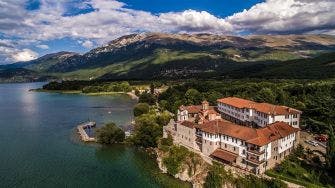
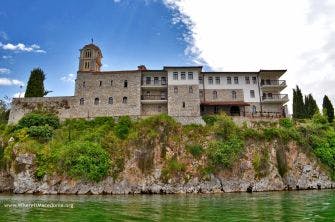
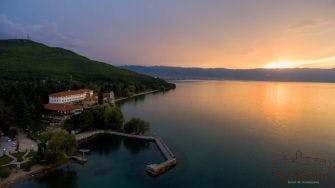
The Monastery of Saint Naum is one of the most important spiritual, historical, and natural landmarks around Lake Ohrid. Located approximately 29 kilometers south of Ohrid near the Albanian border, the monastery sits in a peaceful setting surrounded by forests, crystal clear springs, and the waters of Lake Ohrid.
Built on a rocky hill above the springs of the Crn Drim River, the monastery is widely considered one of the most beautiful places in North Macedonia. Its tranquil atmosphere, natural surroundings, and panoramic lake views make it one of the most visited destinations in the Ohrid region.
The original monastery complex was founded at the beginning of the 10th century by Saint Naum, one of the most important disciples of Saints Cyril and Methodius and a key figure in the spread of Slavic literacy and Christianity in the region.
According to local tradition, visitors can still hear the heartbeat of Saint Naum by placing an ear against his stone tomb inside the church.
Over the centuries, the monastery was renovated and expanded several times. Most of the preserved frescoes and iconostasis date from the 16th and 17th centuries, while some inscriptions and carvings represent some of the oldest examples of Slavic literacy in the Balkans.
The icons inside the church are considered exceptional examples of Orthodox religious art from the 18th century. The beautifully carved wooden iconostasis, created in 1711 by an unknown craftsman, is one of the artistic highlights of the monastery.
Outside the monastery, visitors are often welcomed by the famous peacocks that freely walk through the complex and gardens, adding to the unique atmosphere of the site.
The Monastery of Saint Naum is frequently visited together with Bay of Bones Museum and National Park Galicica during day trips from Villa Varosh.
Location: Monastery
Bay of Bones Museum
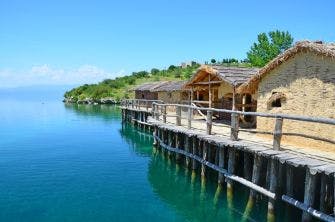
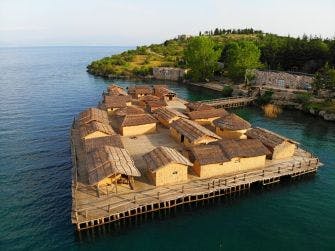
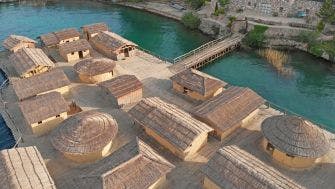
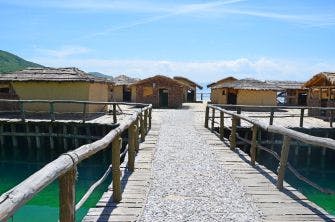
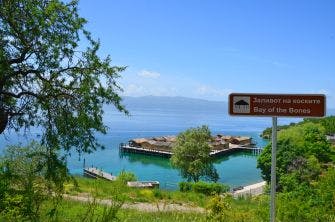
The Bay of Bones Museum is one of the most unique archaeological and tourist attractions near Ohrid. Located on the southern shore of Lake Ohrid near the Gradishte Peninsula, this open air museum offers visitors the opportunity to experience a reconstruction of a prehistoric settlement built directly above the water.
The site is based on archaeological discoveries from an ancient pile dwelling settlement that once covered an area of approximately 8,500 square meters. The original settlement dates back between 1200 and 700 BC and was built on wooden platforms supported by piles above the lake.
Today, the Bay of Bones Museum features an authentic reconstruction of part of this prehistoric village, including wooden houses, walkways, and historical artifacts that help visitors better understand life during the Bronze and Iron Ages around Lake Ohrid.
Above the museum, on the nearby hill of Gradishte, a reconstructed Roman military fortification can also be visited. The fortress once served as a strategic defensive point during the Roman period and offered protection over the surrounding area and lake routes.
Together, the prehistoric settlement and Roman fortification create a unique historical experience where visitors can explore different periods of history in one location, from prehistoric times to the Roman Empire.
The Bay of Bones Museum is one of the most popular attractions around Lake Ohrid and is often visited together with Monastery of Saint Naum and National Park Galicica during day trips from Villa Varosh.
- Phone: +389 46 26 24 98
- Location: Bay of Bones Museum,Р501
Robevci Family House
National Ohrid Museum – Robevci House is excellent place to discover the region’s rich archaeological and artistic heritage.
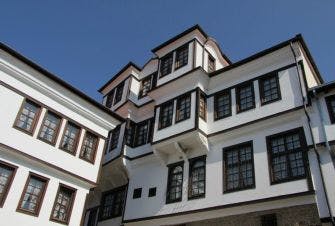
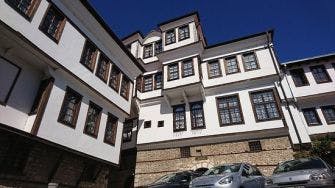
The historic house was originally built in 1864 for the famous Robev family and is considered one of the finest examples of traditional Ohrid architecture. Because of its cultural and historical significance, the building has been protected as a national monument since the period following the Second World War.
Today, the house serves as part of the National Ohrid Museum and contains exhibitions spread across several floors. Visitors can explore collections of archaeological artifacts discovered throughout the Ohrid region, including:
ancient stone monuments
statues and sculptures
historical objects from antiquity
Byzantine and medieval exhibits
Among the museum’s most valuable exhibits are:
a carved torso of the Egyptian goddess Isis dating from the 2nd century BC
an ancient golden burial mask and golden glove discovered near Samuel's Fortress
The upper floors also feature exhibitions dedicated to traditional Macedonian woodcarving, local craftsmanship, and folk art, preserving artistic traditions that continue to exist in Ohrid today.
Located near the lakeside promenade, the Robevci House is one of the most interesting museums to visit while exploring Ohrid Old Town.
Phone: +389 46 26 24 93
Location: Car Samoil 62
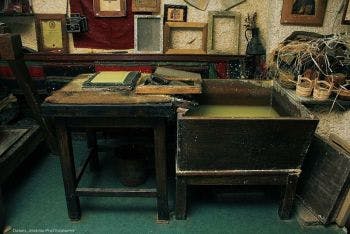
National Workshop for Handmade Paper
The National Workshop for Handmade Paper offers visitors the opportunity to experience traditional paper making techniques that date back thousands of years.
Using methods inspired by ancient Chinese paper production traditions, the workshop demonstrates how handmade paper was once created entirely by hand long before modern industrial production existed.
One of the workshop’s most fascinating features is its original Gutenberg printing press, believed to be one of only a few functioning replicas of its kind in the world. Visitors can see demonstrations of traditional printing techniques and purchase handmade paper products, prints, souvenirs, and artistic items created on site.
Watching the paper making process is especially interesting, as visitors can observe the craftsmanship and historical techniques used to produce each sheet by hand.
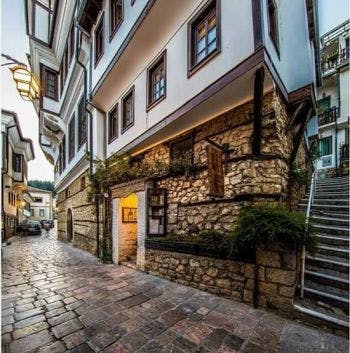
Located in the heart of Ohrid Old Town, the National Workshop for Handmade Paper is a great stop for visitors interested in history, traditional crafts, and local culture.
- Phone: +389 78 223 231
- Location: Car Samoil 60